05 December, 2024

UK Police investing in Face Recogition Technology

 Facial recognition technology (FRT) has become an integral tool for UK law enforcement and security services, enhancing their capabilities in identifying individuals and solving crimes. The primary applications of FRT by UK police include:

1. Retrospective Facial Recognition (RFR): RFR is employed after incidents have occurred, aiding criminal investigations by analyzing images from sources like CCTV, mobile devices, and social media. These images are compared against custody photographs to identify suspects.

2. Live Facial Recognition (LFR): LFR involves real-time scanning of public spaces to match faces against a predefined watchlist of individuals, such as those wanted for serious crimes or considered high-risk missing persons.The Metropolitan Police have utilized LFR in various operations, leading to numerous arrests.

3. Operator Initiated Facial Recognition (OIFR): OIFR allows officers to use mobile devices to capture an image of an individual and compare it instantly against a database, facilitating rapid identification during patrols and routine stops.

The police forcesare expanding their spending on this technology:

https://www.theregister.com/2024/11/25/uk_police_lfr_tender/ 

04 December, 2024

Remove those drives


The Perils of Data Negligence: A Cautionary Tale

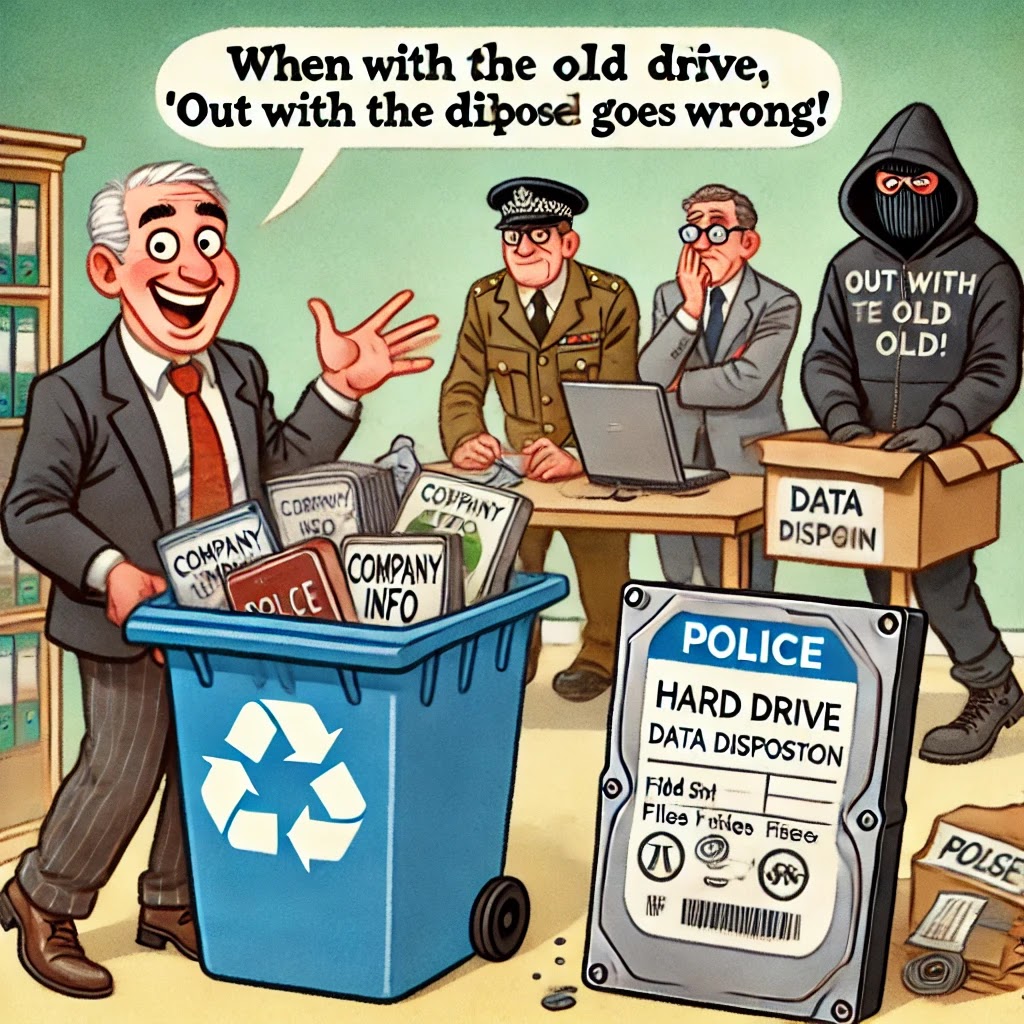
In a small but bustling office, a well-meaning office manager named Claire faced the task of clearing out old equipment. Among the clutter was an outdated office PC, collecting dust in the corner for years. Unaware of the potential consequences, Claire arranged for the computer to be disposed of, simply tossing it in a collection bin at the local recycling depot. She believed the job was done—out with the old, in with the new. But Claire had overlooked one critical step: removing or wiping the hard drive.

Several months later, the discarded PC's hard drive reappeared—but not in a recycling facility. It had found its way to a car boot sale, where a shady character picked it up for a few pounds. This individual was no casual buyer. He repurposed the hard drive to store illegal and abhorrent materials, including child pornography.

The story could have ended there, lost in obscurity, but the criminal’s actions didn’t go unnoticed. Law enforcement eventually traced the illicit files to the hard drive, which still contained remnants of its previous life—business documents, emails, and even personal details of employees from Claire’s office. The company name on the files became the lead in a high-profile investigation.

When police arrived at the office with a warrant, confusion and panic ensued. It didn’t take long for them to piece together the chain of events: the discarded PC, the unremoved hard drive, and the careless disposal. Although the company was not directly involved in the criminal acts, its failure to secure sensitive data led to a reputational disaster, hefty legal fees, and months of scrutiny.

For Claire, the lesson was painfully clear. What seemed like a minor oversight had catastrophic consequences—not only for her career but for the company she cared about. This experience served as a stark reminder that in the digital age, data security doesn’t end when a device is unplugged.

Takeaway: Don’t Skip Data Security in Device Disposal

The tale of Claire’s naive mistake underscores the importance of proper IT asset disposal. Before discarding any device, always:

  1. Remove or destroy storage media: Hard drives, SSDs, or any other data storage components should be wiped or physically destroyed.
  2. Use certified disposal services: Partner with professional e-waste recyclers who comply with data protection regulations.
  3. Educate your staff: Ensure employees understand the risks and responsibilities associated with data security.

In a world where data breaches and cybercrime are on the rise, even small oversights can lead to devastating consequences. Be vigilant, stay informed, and always treat data disposal with the seriousness it deserves. You can find the Information Commissioner's advice here.


03 December, 2024

UReach SD312N SD Card duplicator

 Review: UReach SD312N – The Portable SD/MicroSD Solution for Professionals on the Go

In today’s fast-paced digital landscape, working away from the office is the new norm. For creative professionals, data managers, and tech enthusiasts, dealing with multiple SD and MicroSD cards is often part of the job. Whether it’s for photography, video editing, or data transfer, having a reliable, portable solution for copying and erasing SD cards is essential. Enter the UReach SD312N, a compact yet powerful device that promises to streamline this process wherever you are.

Portability Meets Power

The standout feature of the UReach SD312N is its portability. At just a fraction of the size of bulkier card duplicators, this device is specifically designed for professionals on the go. Its lightweight build and compact dimensions make it easy to toss into a backpack or laptop bag. This portability ensures that you don’t have to compromise on functionality when working remotely, whether you’re at a client’s location, in a coffee shop, or even out in the field.

Despite its small size, the SD312N packs a punch. It supports simultaneous duplication and erasure of up to two SD or MicroSD cards, offering 1:2 copying functionality that’s ideal for quick, efficient workflows. The device supports high-speed data transfers, which means less time waiting around and more time focusing on the work that matters.

User-Friendly and Versatile

Another highlight is its ease of use. With a straightforward interface and a no-fuss setup, the SD312N is ready to use almost immediately after unboxing. It’s compatible with a wide range of SD and MicroSD card formats, making it a versatile choice for professionals who juggle various card types.

The device also features an overwrite function for secure erasure, catering to those who need to clear data for confidentiality or re-use. This feature can be a lifesaver when dealing with sensitive information or preparing cards for new projects.

The Price Tag: Worth It?

However, the UReach SD312N does come with a downside: its price. While its performance and portability are commendable, the cost may seem steep, especially for freelancers or small business owners on a tight budget. For those who don’t require constant SD card duplication or erasure on the go, the investment might be hard to justify. 

We purchased ours from Amazon in the UK, but it was supplied from Germany, this extended delivery by about 1 week. We had an unwelcome email from the courier asking us to pay sales tax (VAT) and their processing fees, before the item was delivered. This added £70.51 to the listed £164 price.  We didn't know at the time, but UReach had a UK store where the device was on sale at £140 including sales tax (VAT). Amazon should have made clear that purchasing from them was an import process.

That said, for professionals who often find themselves managing data in dynamic environments, the SD312N could be worth every penny. Its ability to provide a portable, reliable, and efficient solution in scenarios where traditional setups aren’t feasible is unmatched.

Final Verdict

The UReach SD312N is a niche device with a clear target audience: professionals who need a portable solution for SD and MicroSD card duplication and erasure. Its compact size, high-speed performance, and ease of use make it a fantastic tool for working away from the office. While the price may deter some, those who prioritize portability and efficiency will find it to be a worthwhile investment.

If you’re constantly on the move and need a robust yet portable card duplication tool, the UReach SD312N could be just what you’re looking for—though you might need to dig a bit deeper into your wallet to make it yours.


02 December, 2024


The Hidden Risks of "Bad" Electronic Addresses for Small Businesses

In today’s interconnected world, even small businesses depend on digital tools to thrive. However, not all digital assets are created equal. Acquiring a static IP address or phone number with a problematic history—what we’ll call a “bad” electronic address—can bring unexpected risks to your business. Here’s what you need to know and how to protect your enterprise.


What Are “Bad” Electronic Addresses?

A "bad" electronic address is an IP address or phone number previously linked to criminal, fraudulent, or abusive activities. Unfortunately, when your business inherits these identifiers, their legacy may impact your operations. Key risks include:

  1. Reputational Damage
    Your business could be flagged if its IP address or phone number is associated with spam, scams, or illegal activities. This can harm customer trust and damage your reputation.

  2. Blocked Services and Limited Access
    Websites, email providers, or online services may blacklist IP addresses and phone numbers with questionable histories. As a result, your business might face disruptions in communication or e-commerce operations.

  3. Unwanted Contact and Fraud Exposure
    A recycled phone number could lead to your business receiving spam calls, messages from scammers, or inquiries unrelated to your operations. This not only wastes time but could expose your business to phishing attacks or fraud.

  4. Compliance and Regulatory Challenges
    In the UK, businesses must comply with GDPR and cybersecurity laws. A "bad" electronic address could inadvertently result in non-compliance if it’s associated with previous breaches or malicious activity.


Precautions for UK Businesses

  1. Request a Clean Slate from Providers
    When setting up your business internet or acquiring a new phone number, request a clean history from your service provider. Many telecom and internet providers can ensure the IP address or number they assign is free from prior issues.

  2. Conduct a Digital Background Check
    Use tools like MXToolBox, Spamhaus, or IPVoid to check if an IP address is blacklisted. Similarly, search the phone number online to see if it appears in scam reports or abuse databases.

  3. Implement Robust Cybersecurity
    Secure your network with a VPN, firewalls, and strong encryption to protect your digital identifiers from misuse. Regularly review logs for unusual activity.

  4. Communicate Proactively with Stakeholders
    If you encounter disruptions due to a bad electronic address, inform your customers and suppliers promptly to minimise misunderstandings. Transparency helps maintain trust.

  5. Monitor and Respond Quickly
    Set up alerts for your IP address and phone number to identify any issues early. If problems arise, document incidents thoroughly and work with your provider to resolve them.

  6. Seek Professional Advice
    Consider consulting an IT or cybersecurity professional to audit your digital setup. They can identify potential risks and recommend tailored solutions for your business.


Conclusion

For small UK businesses, maintaining a clean digital identity is just as important as delivering quality products and services. A "bad" electronic address can hinder operations, erode trust, and even lead to financial losses. By taking proactive steps to vet and secure your digital assets, you can protect your business and focus on what you do best—serving your customers.

29 November, 2024

A Drone’s Silent SOS


A Drone’s Silent SOS

In the rugged wilderness of British Columbia, Jason Martin’s weekend hiking trip had gone catastrophically wrong. He had planned for a two-day trek with his drone—a sleek quadcopter he often used to capture stunning aerial shots of remote landscapes. But after straying from the trail to get the perfect sunset shot, Jason found himself disoriented in the dense forest as night fell.

The situation quickly turned dire. His phone had no signal, and his GPS watch had run out of battery after a full day of navigating challenging terrain. Worse still, Jason had underestimated the ruggedness of the terrain, and his supplies were dwindling. By the second day, his attempts to find his way back had only pushed him further into the wilderness.

Desperate, Jason deployed his drone, hoping to scout the area for signs of the trail. He launched it several times, capturing videos of the vast expanse around him, but the dense canopy offered little help. By the end of the day, the drone’s battery was nearly depleted. With no options left, Jason recorded a brief SOS message using the drone’s camera, explaining his situation and coordinates, hoping someone might eventually recover it.

What Jason didn’t know was that his drone was equipped with a feature that automatically transmitted limited GPS data back to the manufacturer’s servers after each flight, part of a diagnostics and performance reporting system. When Jason failed to return home, his worried family reported him missing, triggering a search and rescue operation.

The breakthrough came when one of Jason’s relatives contacted the drone manufacturer, hoping they could provide some insight into his last known flight. The company’s technical team reviewed the data and discovered a series of recent GPS coordinates logged deep in the forest—locations that matched the times Jason had launched his drone. Each ping painted a clear picture of his movements, pinpointing the area where he was likely stranded.

Rescue teams were immediately dispatched to the remote region, armed with the drone’s GPS data. After hours of searching through dense underbrush, they found Jason sitting beside a small clearing, his drone perched nearby like a loyal companion. Exhausted and dehydrated but alive, he was overjoyed to see help arrive.

As the helicopter lifted him out of the wilderness, Jason couldn’t help but marvel at the unexpected heroism of his drone. Designed to capture memories, it had instead saved his life. The manufacturer later shared the story publicly, emphasizing the importance of technology in life-or-death situations. Jason, meanwhile, vowed never to underestimate the wilderness again—and never to leave home without his drone.


The secret network


The Fall of the Unseen Network

In a quiet corner of Manchester, Marcus “Ace” Lambert prided himself on his ability to stay off the radar. For years, the low-profile drug dealer had evaded police detection, relying on burner phones, cash deals, and an uncanny knack for avoiding technology that might betray him. But it was precisely this technology—hidden in plain sight—that would lead to his downfall.

One crisp November evening, Marcus set off for a meet with a high-paying client in Leeds. He left his flat armed with a bag of carefully weighed packets and his trusty prepaid mobile phone. What he didn’t know was that his journey would inadvertently leave a trail far more incriminating than anything found in his car.

In homes and offices along his route, countless Alexa-enabled devices lay dormant, waiting for their owners to issue a command. While Marcus had never used Alexa, his phone, like many modern devices, routinely sent out signals in search of Wi-Fi networks. As he drove, it pinged unconnected Alexa devices that detected the phone’s unique MAC address and briefly logged the interaction, a feature designed to help improve Wi-Fi connectivity.

A few days later, Marcus’s luck ran out when an unrelated arrest revealed the name of his client. The police began piecing together Marcus’s movements but lacked hard evidence to connect him to specific deals. Then a tech-savvy officer stumbled upon the Alexa data, an unassuming goldmine. A warrant allowed access to logs from homes along Marcus’s suspected route. Sure enough, timestamps from Alexa devices revealed a trail of pings that matched Marcus’s burner phone.

The data told a story. From his flat in Manchester, through petrol stations and side streets, to the exact address of the client in Leeds, the unintentional digital breadcrumbs placed Marcus squarely at the scene. His car was tracked on CCTV, and the timeline of the pings corroborated every detail of his movements.

When confronted, Marcus dismissed the evidence as coincidence, but the prosecution’s case was airtight. In court, an expert explained how the passive network signals had sealed his fate. A jury, captivated by the peculiar nature of the evidence, took less than two hours to convict him.

Marcus Lambert was sentenced to seven years in prison. For all his efforts to stay invisible, it was the unseen, everyday technology surrounding him that had ensured his capture.


25 November, 2024

Not as safe as you think.

 The Yellow Betrayal

Mark had spent months undercover, unearthing a massive corruption scandal involving a prominent government official. His exposé was airtight—photos, testimonies, financial records—all meticulously compiled. With a trembling hand, he printed the draft from his home office and carried it to a trusted colleague at a local coffee shop.

Hours later, as he reviewed the final edits with his colleague, he noticed strange, nearly invisible dots scattered across the margins of the pages. He dismissed them as a printer glitch, focusing instead on his story’s imminent publication.

The next morning, a knock at his door shattered his routine. Three men in suits identified themselves as government investigators. They had a warrant, citing possession of classified documents. Mark froze. His stomach sank as they presented a printed page from his draft—one he had never shared electronically.

“How did you find this?” he stammered.

“Your printer helped us,” one agent replied coolly. “Those dots tell us when and where this was printed. Even the printer’s serial number.”

Mark's blood ran cold. The very tool he trusted to spread the truth had betrayed him. As they cuffed him, his mind raced. He had uncovered the corruption, but the hidden dots on his draft had uncovered him.

The story would go unread, buried along with his freedom.